Friday, September 18, 2009

When Sport becomes a god


This article will appear in an upcoming edition of The Justin Texan:

Football season is in full swing. This means that high school, college and NFL teams are doing battle on the gridiron and fans are buying tickets, merchandise, paying for special packages on their cable and satellite services to see more games, and starting fantasy football leagues. Athletes are training, some are taking steroids, and parents are carting their first graders to football fields to don pads and helmets and learning how to crash into each other like miniature torpedoes.

I like football. I watch it now and then. I’m originally from Buffalo, NY and used to go to a few Buffalo Bills games a year. I’ve been to a few playoff games in sub-zero weather. I’ve even been to a home opener here in Dallas (which is tough for a die-hard Bills fan) when we got tickets for chump change. I used to be involved in a couple of fantasy leagues and even won a league once.

Here’s my question for myself and everyone else who likes football: at what point does our enjoyment of the game become idolatry? When do we cross the line from healthy enjoyment to outright obsession? Is it when we skip church to go to a game? When we pay more money for merchandise or football equipment than we give to a local church? When we care more about not missing a practice than whether or not our friends know Christ? When you know your team’s playbook better than you know the Bible? Where is that line?

I’ll leave the specific answer to that question to everyone who names the name of Christ and is involved with sport. But generally speaking, theologians agree that idolatry happens whenever something or someone becomes more important than God Himself. I think it’s safe to say that comparing the time, money, and energy we give to the Lord (lit. “Master”) and sport would be a good place to start.

Why do we do this? Why are we content with so little? We find more joy in watching a millionaire run across a chalk line carrying the skin of a pig than we do in the one, true living God! Isn’t there something wrong with this picture? We care more whether our kids, whose ages are measured in single digits, can hit, shoot a gap, throw a ball and make a play than we care whether they know Christ! We’d gladly trade their soul for a Super Bowl ring! “Dereliction of duty” does not begin to describe the father who would settle for such a trade. It’s spiritual child abuse.

Even while you are reading this, if you’ve read this far and not tossed this paper out in a fit of rage, you are accusing me of taking my Christianity too far. Oh really? How far are we supposed to take it? I seem to recall something about Jesus saying that if anyone wanted to come after Him, he must deny himself, take up his cross and follow Him! In other words, as Dietrich Bonhoeffer said, “He bids us come and die.” Pretty extreme, I know, but I don’t write the mail, I just deliver it.

What really mystifies me is that professing Christians idolize a false god. Could it be due to the fact that they can “see” football, games, sport and can’t physically see the living God that they claim to love, serve and adore? Augustine was once approached by a heathen who showed him his idol and said, “Here is my god. Where is yours?” Augustine replied, “I cannot show you my God; not because there is no God to show but because you have no eyes to see Him.”

Do you have eyes to see Him? Or are you blind to the beauty, the magnificence, the power of this living God that we claim to serve? Are you dazzled with Friday night lights or the glory of God?

Tuesday, September 15, 2009

Declaration of War


Saints, please watch this and be moved. Life is not a game. It is not designed for your personal comfort or amusement. This is a war.

Monday, August 31, 2009

Friday, August 28, 2009

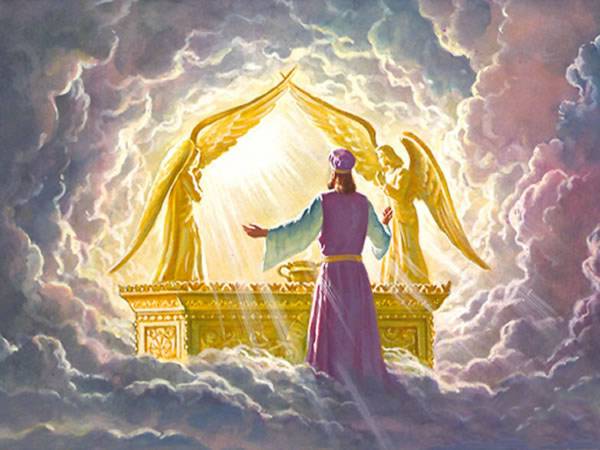
The Glory of God


This article will appear in an upcoming edition of The Justin Texan.

Last time we considered the holiness of God and what that means to us as sinners. He is entirely separate from us and sinless. As such, He is different from us and there is a great gulf fixed between the character of God and the character of man.

Today, we finish this part of our series with a consideration of the glory of God. Just as with the term "holy", "glory" in our vernacular means something much less than what it means with God. We speak of the "glory days" of our youth: victories and accomplishments that we have attained for ourselves or a team. We also talk about the term in the sense of patriotism: a nation being glorious in its ideals and accomplishments. Our flag is even called "Old Glory."

But what is the glory of God? According to Wayne Grudem's Systematic Theology (page 220f.), it has two senses: 1) honor or excellent reputation and 2) the bright light which surrounds the presence of God. They are closely tied together because the bright light which surrounds God is symbolic of the excellence of His reputation. In the first sense, the Bible says that God created mankind "for my glory" (Is. 43:7). In the latter sense, the Bible says that He dwells in unapproachable light (1 Tim. 6:15-17).

The honor of God is of infinite more importance than our puny, feeble attempts to exalt ourselves. Whether it is through physical fitness, plastic surgery, cosmetics, clothing, possessions, reputation, job position, ad infinitum; our attempts to exalt ourselves and get others to recognize our importance or worth are ridiculous. Why? Because God is the only One who is worthy of praise. Only His reputation is worthy to be known. As we've already said, all of mankind was created for His glory (not ours) and any time we deviate from that plan to seek after our glory, we sin against a powerful, holy, glorious God.

This is the essence of the first of the Ten Commandments: "You shall have no other gods before Me" (Ex. 20:3). Here in the Bible belt, it's not common to see temples to false gods with altars and incense burning (although there are some). But it is common to see self-made reputations presented as reality to those who might come and worship at our own altars of self promotion. This is as common as pennies in evangelical churches where pastors and other leaders are elevated on pedestals and his public image worshiped. The tragedy is that in places of worship, God is not worshiped, but a carefully crafted public relations image IS.

Whatever this is, it is not Biblical Christianity. A.W. Tozer said, "...everything God does is praiseworthy and deserves our deepest admiration. Whether He is making or redeeming a world, He is perfect in all His doings and glorious in all His goings forth". Friend, is this what your life looks like? Does it continually give praise, credit and glory to God or are you chasing after the applause of men for yourself? Do you deeply admire God and long to make Him appear to be great amongst others or are you living for your own accolades? If you live for yourself, please repent. Give up everything for His glory. He is worthy.

Monday, August 24, 2009

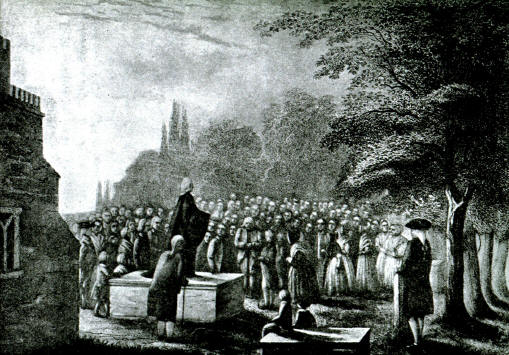
John Wesley on Reading


I just stumbled across this today: a portion of a John Wesley letter to a fellow preacher on the importance of reading. In spite of Wesley's busy schedule, he found time to broaden his thinking with reading.

So much open-air preaching sounds like other preachers. What's the remedy for this? A wide range of reading. We're not open-air parrots, we're open-air preachers.

Here's Wesley's letter, taken from an editorial by J.B. Chapman in The Preacher's Magazine (Vol. 6, No. 1 January 1931). It was written to one John Premboth on August 17, 1760. It's as pertinent today as it was 249 years ago!

"What has exceedingly hurt you in time past, nay, and I fear to this day, is want of reading. I scarce ever knew a preacher read so little. And perhaps, by neglecting it, you have lost the taste for it. Hence your talent in preaching does not increase. It is just the same as it was seven years ago. It is lively, but not deep; there is little variety, there is no compass of thought. Reading only can supply this, with meditation and daily prayer. You wrong yourself greatly by omitting this. You can never be a deep preacher without it, any more than a thorough Christian. O begin! Fix some part of every day for private exercises. You may acquire the taste which you have not: what is tedious at first, will afterwards be pleasant. Whether you like it or no, read and pray daily. It is for your life; there is no other way; else you will be a trifler all your days, and a petty, superficial preacher. Do justice to your own soul; give it time and means to grow. Do not starve yourself any longer. Take up your cross and be a Christian altogether. Then will all children of God rejoice (not grieve) over you in particular."

Friday, July 31, 2009

Who is God?

This article will appear in the August 11th edition of the Justin Texan.


This installment attempts to briefly deal with an issue that entire libraries have unsuccessfully attempted to address. Who is God? The great writer and pastor of the Christian and Missionary Alliance, A.W. Tozer once wrote, “The most important thing about you is what you think about God.” Considering what the Bible says about the sin of idolatry, it can determine your eternal destiny in Heaven or Hell. Galatians 5:20 teaches that idolaters will not inherit the kingdom of God. If you are worshipping a false conception of God, praying to a god who does not exist except as a figment in your own imagination, then your soul is in real danger on the day of judgment. This is why it is so important to get our information about God from the right source: the Bible.

What do we know about Him from the Scriptures? We know that He is Creator. The very first verse of the Bible says, “In the beginning God created the heavens and the earth” (Gen. 1:1). Genesis 1-2 goes on to explain that He did so by speaking the world into existence in six twenty-four hour days. This creation took no effort on His part. He simply willed light, land, water, plants, and animals to be and they existed! Such power is unimaginable humanly speaking.

But His role as Creator goes even further. His is a universe-sustaining power. Colossians 1:18 states that in Christ all things consist (by the way, Jesus is God). In other words, the only reason this universe holds together, why atoms hold together, is because the Lord Himself holds it all together. Some Bible scholars believe that when these heavens and earth are recreated, the present ones will “dissolve in fervent heat” (2 Pet. 2:10) simply because the Lord will remove His presence from the elements!

Even more astonishing, this sustaining power extends to your very physical life. Acts 17:25 and 28 reveal that God gives life and breath to all things. It says that in Him we live and move and have our being! The only reason your heart beats today, the only reason why your lungs draw breath, the only reason your brain emits waves is because God allows it in His good pleasure. No wonder the writer of Hebrews wrote that it is a fearful thing to fall into the hands of a living God (Heb. 10:31). Know it or not, you have already fallen into His hands.

In His mercy, He gives you what you do not deserve: life. The Bible says that the soul that sins shall die (Ezek. 18:4). How many sins have you committed in your life? How many lies have you told? How many times have you loved yourself more than God? How many times have you had a lustful thought? How many times have you blasphemed this God who created the universe, sustains it, and holds your life in His hands? Yet, you live! Why? Simply because God is rich in mercy and has given you an opportunity to hear and respond to the gospel.

My friends and neighbors, you can have peace with this great and mighty God. That peace comes only through what Christ has done. God in the flesh, this God-man, offered Himself up as a sacrifice on the behalf of sinners. He took on Himself the sins of all those who are His so that you could be declared right before God (2 Cor. 5:21). Turn from your sins and cast yourself on the mercy of Christ. For more, please visit http://www.yougotourtract.com/.

Jon Speed is co-founder of The Lost Cause Ministries, an evangelism ministry based here in Justin, TX. He is a member of First Baptist Church of Briar. He can be reached at jon@lostcauseministries.com.

Monday, June 29, 2009

The Second Most Controversial Question

This column is slated to run in the July 7th edition of The Justin Texan.

Last time I wrote about the most controversial question in the Bible belt: “What is the gospel?” Today I would like to write about the second most controversial question: “What effect should the gospel have on our lives?”

On the surface of it, this does not seem like a controversial question at all. People expect some kind of effect from religious beliefs. If nothing else, it affects one’s weekly schedule. In other words, adherents attend religious services at places of worship. Muslims go to mosques, Buddhists go to temples, Jews attend synagogue and Christians go to church. In some cases, it affects their daily schedules. Muslims pray five times per day. Some Christians pray before every meal.

But what about the gospel? The claim of Christianity is exclusive; Biblically oriented Christians claim that Jesus is the way, the truth and the life (Jn. 14:6). We claim that Christ is God in the flesh (Jn. 1:14). We claim that the message of Christianity has inherent power; the power to change people, not just their schedules. Scripturally, it is the power to bring a spiritually dead man to life (Eph. 2:1-7). Since this is true, the question remains: “What effect does this message have on us?”

To hear some professing Christians tell it, it has no effect. Almost all would agree that it SHOULD cause change in someone’s life, but some say that it does not always follow that a Christian changes. He might have made a religious decision, participated in a religious ritual (walking an aisle or getting baptized), or even joined a church. But do they follow through on their outward commitment? And if they do not, can they be called a Christian?

Once again, the big question is, “What does the Bible say?” What it says gives no hope to the professing Christian who is a hypocrite. The Bible says that those who call Christ “Lord”, preach and even have evidences of spiritual power will not be allowed into heaven if they habitually practice sin (Matt. 7:21-23). It says that those who claim to know the Lord and yet do not obey Him are liars (1 Jn. 2:4). The Apostle John also says that those who habitually practice sin do not know the Lord (1 Jn. 3:4-6). The Apostle Paul gives lists of sins, which if habitually practiced, prove the true nature of the professing Christian (1 Cor. 6:9-10; Gal. 5:19-21).

These are all put forward in the negative sense. How does the Scripture state it positively? 2 Corinthians 5:17 says that if any man is in Christ, he is a new creature; the old things have passed away and all things have become new! In Luke 9:23 the Lord Himself said that if any man would come after Him, he must deny himself, take up his cross (be willing to die) and follow (order our lives after) Him! The Apostle James says that we must be doers of the Word and not just hearers who deceive only ourselves (Jas. 1:22).

Friends and neighbors, eternity is too long to be wrong about our position with the Lord. The Puritan Thomas Watson, writing in the 17th century, warned of those who would end up going to Hell with the hope of Heaven. Could that be you? Please, do what the Apostle Paul said and spend some time examining yourself to see if you really are a Christian (2 Cor. 13:5).

If someone claimed to have been hit by a logging truck, you would expect to see some evidence of the impact. Who is bigger? A logging truck or God? Why don’t we see radical changes in the lives of those who name the Name of Christ?